Remove Chocolate & Candy Stains from Upholstery
Cleaning & Stain Removal, Upholstery Care, Rugs
How to Remove Chocolate and Candy Stains From Upholstery and Rugs
Chocolate and candy are great as snacks, not as permanent features on your cream sofa or hand-knotted rug. As a senior engineer, I think of stain removal the same way I think of debugging: understand the problem, choose the right tools, and follow a clear sequence of steps. With the right approach—and help from Fiber-Seal of Arizona—many chocolate and candy stains can be removed safely and effectively.
Why Chocolate Stains Are So Difficult to Remove
Chocolate is not a single “type” of stain. It’s a composite: oils and fats from cocoa butter, sugars, proteins (especially in milk chocolate), plus dark pigments. That means you’re dealing with both oil-based and water-based components at the same time. Add peanut butter, caramel, or nougat and the chemistry gets even more complex. This is why repeatedly adding plain water or an all-purpose cleaner may fade the stain but not fully remove it—and why the order of your steps matters as much as the products you use.
📌 Key Takeaway: Think of chocolate as a multi-layer bug: you must handle the oily “layer” first, then the water-soluble “layer,” or you risk locking in part of the stain.
The Most Important Rule: Act Quickly, but Don’t Scrub
On any textile, time is a factor. The longer chocolate or candy sits, the deeper it can migrate into fibers and the harder it is to remove. But “fast” does not mean “frantic.” Avoid scrubbing, which can spread the stain and distort the fabric. Work deliberately: blot, lift, and test before you apply any product. Always check manufacturer care labels, and be especially cautious with wool, silk, linen, rayon/viscose, and fabrics with unstable dyes. When in doubt, pause and call a professional like Fiber-Seal of Arizona rather than experimenting.
Step-by-Step: How to Remove Chocolate Stains From Upholstery
Step 1: Remove the Excess Chocolate
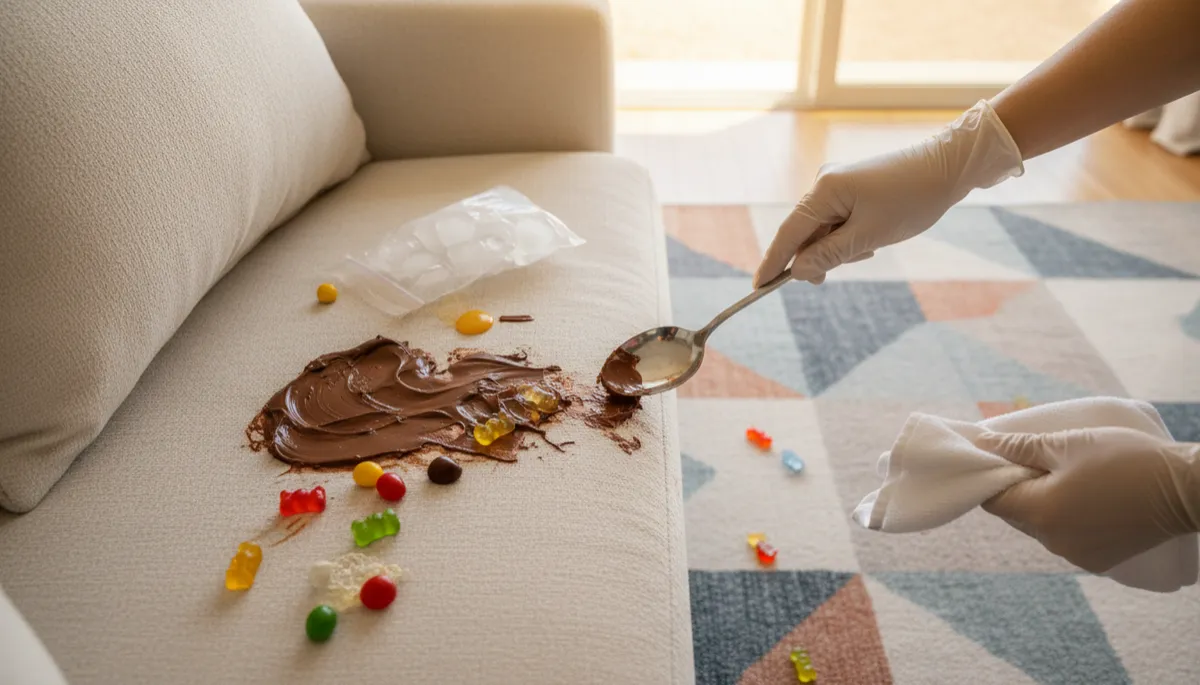
First, remove as much loose chocolate as you can without pushing it deeper into the textile:
Lift larger pieces by hand.
Gently scoop softened chocolate with a spoon.
Carefully scrape excess with a dull edge (like a plastic card).
Blot loose material with a clean white towel.
Do not rub or scrub. Your goal is to lift material off the surface, not grind it into the fibers—especially when Arizona heat has already softened or melted the chocolate.
Step 2: Address the Oil-Based Portion First
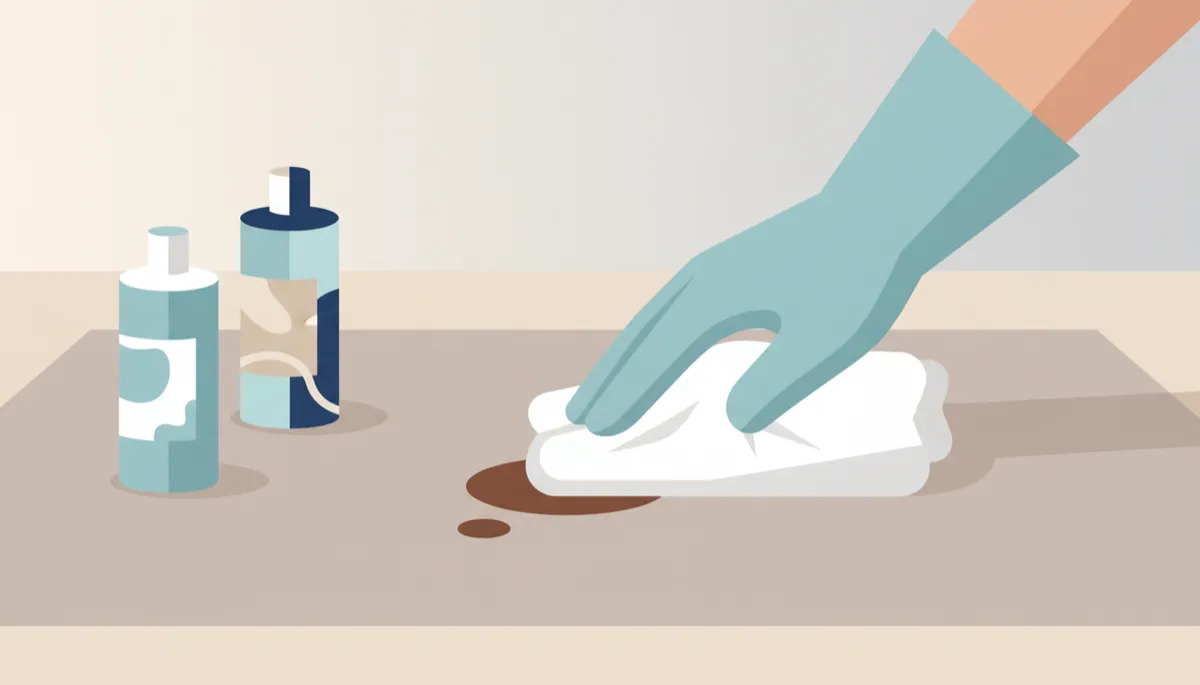
Fiber-Seal recommends starting with an appropriate dry-cleaning solvent, such as Kleen-Tec, to handle the oily component. Instead of saturating the fabric, apply the solvent to a clean white towel and gently blot the stained area. Rotate to clean sections of the towel as the chocolate transfers. Then allow the area to dry completely before moving on.
# Pseudo “algorithm” for treating a chocolate stain on upholstery

def treat_chocolate_stain(fabric):
    if fabric.is_delicate() or fabric.is_unknown():
        return "Call Fiber-Seal of Arizona first"

    remove_excess_chocolate()

    # Phase 1: Oil-based portion
    apply_solvent_to_towel("Kleen-Tec")
    while chocolate_transfers_to_towel():
        blot_gently()
        rotate_to_clean_towel_section()

    wait_until_area_is_completely_dry()

    # Phase 2: Water-based portion
    apply_water_based_cleaner_to_towel("pHnominal")
    while residue_transfers_to_towel():
        blot_gently()
        rotate_to_clean_towel_section()

    if signs_of_damage_or_dye_bleed():
        stop_and_call_fiber_seal()

    return "Spot treated conservatively"
Step 3: Then Treat the Water-Based Portion
Once the area is dry, you can safely address the remaining water-soluble material. Fiber-Seal recommends pHnominal, included in the Fiber-Seal Fabric Care Kit. Lightly mist pHnominal onto a clean white towel (not directly onto the upholstery) and blot the spot, moving to a clean part of the towel as transfer continues. Repeat cautiously as needed and remember: blot, don’t scrub.
Step 4: Know When to Stop and Call a Professional
Stop DIY treatment and contact Fiber-Seal of Arizona if you notice:
Color or dye coming off on your towel.
A water ring forming around the spot.
Texture changes, pile distortion, or spreading discoloration.
Adding more chemistry at this point is like randomly changing code in production: it usually makes things harder to fix later.
What About Chocolate on an Area Rug?
The same core principles apply—lift excess, treat oils, then water-based residue—but rugs introduce extra complexity. A single rug can combine wool, cotton, silk, or rayon/viscose in both the face fibers and backing. Excess moisture can cause dye bleeding, browning or yellowing, buckling, shrinkage, or backing damage. Always avoid saturating a rug, and be especially conservative with wool, silk, and rayon/viscose. For handmade, high-value, or unknown rugs, professional guidance from Fiber-Seal of Arizona is strongly recommended before you apply household cleaners.
Professional care protects both the face fibers and backing of fine rugs.
How to Remove Hard Candy From Upholstery or Rugs
Hard candies and lollipops can weld themselves to fibers, especially after exposure to warmth or moisture. The worst thing you can do is simply yank them off—this can cause snags or permanent pulls. Instead, “refactor” the problem by changing the candy’s state first.
Use the Ice Method to Harden the Candy
Place ice cubes in a sealed plastic bag and lay it over the stuck candy until it becomes thoroughly chilled and hard. Once firm, gently work at the candy with a spoon or dull plastic edge, gradually separating it from the fibers instead of pulling aggressively. After the solid pieces are removed, a sugar residue may remain. After testing in an inconspicuous area, use a suitable water-based fabric cleaner such as Fiber-Seal pHnominal, applied to a clean towel and blotted—not poured—onto the textile.
How to Remove Gummy or Chewy Candy
Gummy bears, fruit chews, and other soft candies behave similarly to hard candy once they’ve stuck to fibers—they’re just more flexible and sticky. Don’t pull. Instead, use the same ice method to firm the candy, then gently lift or scrape with a spoon or dull edge. Once the bulk is removed, treat any remaining water-soluble residue with an appropriate cleaner such as pHnominal or, for suitable washable textiles, a very dilute solution of mild dish soap (about one or two drops in eight ounces of warm water), always applied to a towel first and blotted on. If you feel resistance or see fibers moving with the candy, stop and call a professional. A little patience is far cheaper than reupholstering a chair.
How Arizona Heat Makes Candy Stains Worse
In Arizona, chocolate and gummy candies can go from solid to liquid in minutes—inside a car, on a patio, or even just carried around outdoors. That same heat that turns a chocolate bar into a puddle also lets it flow deeper into upholstery or rug fibers. When you’re entertaining outdoors, hosting a birthday party, or handing out Halloween candy in warm weather, be especially mindful of chocolate and sticky treats near:
Outdoor cushions and patio furniture.
Vehicle upholstery and indoor/outdoor rugs.
Poolside furnishings and light-colored textiles.
If chocolate melts, resist the urge to smear it around with a napkin. Remove the bulk carefully first, then follow the staged process above.
Extra Care for Light-Colored Upholstery
White, cream, beige, and other light neutrals are staples in Arizona interiors, but they show everything. Even a trace of chocolate can be highly visible, and aggressive cleaning can sometimes leave a water ring or lightened patch that looks worse than the original spot. Natural fibers like cotton and linen are especially prone to browning and rings when treated improperly. For designer, custom, or otherwise valuable light-colored upholstery, conservative spot treatment and early involvement from Fiber-Seal of Arizona are usually the smartest moves.
What Not to Do With a Chocolate or Candy Stain
Don’t scrub. This can spread the stain, drive it deeper, and distort texture.
Don’t oversaturate. More liquid is not always better and can cause rings, bleeding, or damage.
Don’t default to hot water. Heat can set certain stains and affect dyes and proteins.
Don’t mix household cleaners. Different chemistries are not automatically compatible and can react unpredictably.
Don’t use bleach unless the fabric manufacturer explicitly allows it. Many textiles cannot tolerate it, even diluted.
Don’t keep experimenting endlessly. Each new product is another variable; too many make professional correction harder.
What If You Don’t Know What the Fabric Is?
In software, you wouldn’t run a random script on a production server you don’t understand. The same logic applies to textiles. Polyester may handle a method that would permanently damage rayon. Wool behaves differently from cotton; silk is its own world. If you’re unsure what you’re dealing with, check:
Manufacturer labels and furniture documentation.
Rug labels, purchase records, and upholstery specifications.
Information from your interior designer or showroom.
If the fabric is still a mystery, that’s the moment to call Fiber-Seal of Arizona instead of conducting chemistry experiments on a mystery substrate.
Prevention: Making the Next Spill Easier to Handle
The easiest stain to remove is the one that never penetrates deeply. Professional fabric protection from Fiber-Seal helps reduce the absorbency of appropriate upholstery, rugs, and other textiles, giving you more time to respond before spills soak in. That’s especially valuable if you have children, pets, frequent guests, light-colored furniture, high-end or custom furnishings, or vacation rental properties. Fiber-Seal clients receive a Fabric Care Kit with carefully selected products and clear instructions—essentially a tested “toolkit” rather than a random collection of cleaners. When a protected piece needs more than at-home care, complimentary spot-cleaning assistance is part of the ongoing service.
When to Call Fiber-Seal of Arizona
Just as there’s a point where you escalate a production issue to a specialist, there’s a point where DIY stain removal should stop. Consider calling Fiber-Seal of Arizona when:
The textile is wool, silk, linen, or rayon/viscose.
The piece is valuable, custom, designer, or part of a curated interior.
You’re dealing with a handmade or specialty rug.
The stain has dried or has been there for some time.
Dye begins transferring, or the fabric’s texture changes as you blot.
A ring, halo, or other discoloration develops.
You’ve already tried products without success, or you’re simply unsure what to do next.
💡 Pro Tip: The earlier Fiber-Seal of Arizona is involved, the more options they typically have to save the textile and avoid replacement.
Enjoy the Treat—Fiber-Seal Can Help With the Tricks
Chocolate belongs in your mouth, not your sofa. But homes are meant to be lived in, and in real life there will be Halloween candy on area rugs, movie-night chocolate on sectionals, and birthday-party gummies on dining chairs. Knowing how to respond—lifting excess, treating oils then water-based residue, avoiding oversaturation, and stopping when you see warning signs—can be the difference between a temporary spot and a permanent reminder.
Fiber-Seal helps homeowners, interior designers, property managers, vacation rental hosts, and businesses across the Phoenix metro area protect and maintain the luxury soft surfaces they’ve invested in. With professional fabric protection, expert spot care, and eco-responsible cleaning practices, Fiber-Seal aims to be the only fabric care company you ever need—so you can enjoy your interiors without constantly worrying about the next spill.
Have a chocolate or candy stain you’re not sure how to treat? Contact Fiber-Seal of Arizona today to schedule your consultation and protect your furnishings before a small accident becomes a costly replacement.